

Fire is one of humanity’s most important discoveries, and people have relied on it for heat for thousands of years. A fireplace brings that warmth into the home in a controlled way during winter. Early fireplaces were little more than a hearth and a chimney opening, so it is easy to see how much heating technology has improved. Today, anyone planning a fireplace or stove can choose from several systems. This stove comparison summarizes the main advantages and disadvantages of the most common options.
Stove comparison: wood, gas, pellet, and electric fireplaces

Modern indoor fireplaces come in many shapes, materials, and sizes, so they can provide comfort and become a focal point in the room. Marble, stone, stainless steel, and iron are traditional surround materials, while many contemporary stoves include panoramic glass so the flames stay visible.
Wood stoves – fireplace comparison

Advantages:
– The look of a real fire, the scent of wood, the crackle, and dancing flames
– Independent from oil and gas prices
– Wood can be an economical fuel where it is locally available
– Uses a renewable fuel
Disadvantages:
– Requires regular cleaning
– Requires a suitable chimney or flue
– The fire needs regular attention
– No simple on/off switch
– Efficiency depends on the model, fuel, and installation
– Poor installation or maintenance can cause smoke and soot problems
– Stored wood takes up space
– Lighting and tending the fire requires physical effort
Futuristic Mvtikka fireplace design by Nüvist
Stove design ideas


Gas fireplace
Advantages:
– Burns more cleanly than many traditional wood fireplaces when properly installed
– Fuel supply is easier to manage than stacked logs
– Flexible installation options
– Soot-free operation
– Good heat output
– Flame is easy to control
– Requires less effort and can include automatic ignition or timer controls
Disadvantages:
– Does not create the same atmosphere as a wood fire
– Rising fuel costs
– Requires a natural-gas connection or suitable fuel supply


Pellet Stove

Advantages:
– Efficient heat output compared with many oil or gas systems
– Pellets may cost less than oil or natural gas, depending on the market
– Easy to store
– The pellets are ready to use
– Pellets are a renewable fuel
Disadvantages:
– Requires electricity
– Pellets need dedicated storage space
– Ash must be removed, as with a wood stove


Electric Fireplaces


Advantages:
– Easy to install
– Runs on electricity, with no smoke or ash
– Often includes remote or simple electronic controls
– Suitable for apartments, houses, and hotels
Disadvantages:
– Cannot fully reproduce the atmosphere of a real flame
– Often functions more as decoration or supplemental heat
– Can be expensive to operate, depending on electricity prices
– Depends on the power grid
Corner fireplaces

Corner fireplaces are installed at an angle and usually combine a firebox with a broad viewing window. The combustion chamber may be raised slightly above floor level and can be open or enclosed. Depending on the room, models are available with left- or right-hand glass. Their materials can echo the rest of the interior, from marble, sandstone, natural stone, and tile to wood. Rectangular, rounded, and mixed forms are all possible. Brick or stone versions can look especially substantial and rustic, but they also require careful planning, proper installation, and safe use.


Freestanding fireplaces


Freestanding stoves are often powered by gas or bioethanol and may not require a traditional masonry chimney. Compact wood-burning versions also exist, but they still need a proper flue. Because they radiate heat from several sides, freestanding models can work as sculptural room dividers. Bioethanol versions have an open flame, while freestanding gas fireplaces are typically protected by glass.
Fireplaces with two- or three-sided views

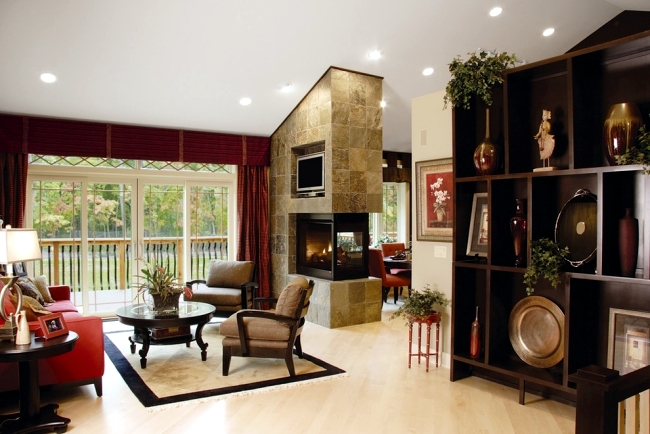
These fireplaces are designed for installation in a wall or partition so the fire can be seen from more than one room. Double-sided, tunnel, or corner models can separate a living room from a dining area while keeping the spaces visually connected. They are decorative, often efficient, and well suited to open-plan homes. Many models are available for wood or gas, and some designs include storage space for firewood.



 Peter Dark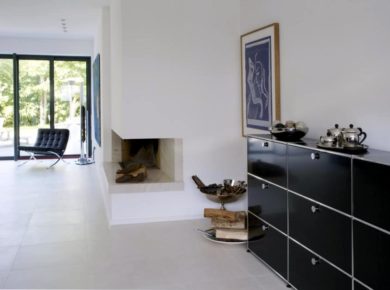
 miranda_shida
 Anna Lohan




1 comment
where the hell are the pioneer stoves!!!!!!!!!!!!!!!!!!!!!!!! u guys are going to kill me