Many homeowners want to build a swimming pool at home, but overlook the possibility of a natural pond in the garden. A natural or semi-natural swimming pond needs plants and a simple aeration system to keep the water clean, unlike conventional pools that require chemicals, pumps, filters and other costs. Organic swimming ponds offer the beauty of a garden pond, along with a dedicated swimming area and crystal-clear water. Many people are still wary of adding one to their property, so here are some myths about these beautiful natural pools.
The organic swimming pond in the garden – Myth #1: A biological pond is expensive
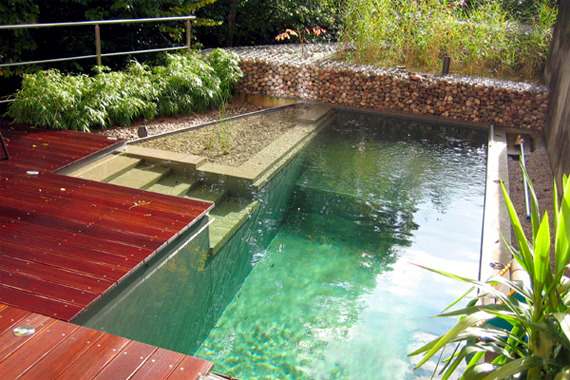
Natural swimming pools cost about the same as traditional pools. However, because no added chemicals are needed, the annual maintenance costs are much lower.
The biological pond in the garden – Myth #2: Natural pools need a lot of work

A natural ecosystem is built to take care of itself. Checking chlorine? No. Balancing pH? Relax. The main task is removing leaves from the water surface. There are filters to monitor, but no chemical routine. Bonus: the filtration system can operate without the same energy demands as a standard pool.
Myth #3: I will swim with algae and aquatic plants

Most natural pools have two connected zones: one for swimming and one planted regeneration area. The roots of aquatic plants such as cattails, water lilies and duckweed remove bacteria and other contaminants.
Myth #4: I will swim with tadpoles

Wildlife is attracted to a natural biological pond in the garden, including dragonflies and frogs. You cannot completely avoid them, because the pond is their natural habitat, and they are useful. They eat mosquitoes and larvae, helping keep biting pests away.
Myth #5: The bottom is muddy

Sterilized soil works for the planted pond area, but for the swimming zone you can use cement and bentonite. Gravel at the bottom of the planting area provides a habitat for beneficial bacteria that break down organic matter.
Myth #6: The water is stagnant

Standing water can be unpleasant, but a simple pump keeps water moving continuously around the plant roots so the natural purification process works. This pump can do the job for much less than a standard filter. If you add a bubbler, the plants also receive more oxygen.
Myth #7: It does not have to look wild

In fact, it is possible to build a natural swimming pool while maintaining the look of a traditional pool, with concrete sides and bottom and a classic blue pool finish. You can also install a gravel filter for the regeneration area, tuck it away or build it on another level.
Myth #8: The water is not clean

A natural organic garden pond uses biological filtration to create clear, clean, chemical-free water. Depending on your preferences and climate, water is circulated by a pump through a gravel filter or filtration system; gravel filters work best in warm climates. Maintenance is simple: once a month, remove loose sediment with a pool vacuum.
Myth #9: You need to drain the organic pond in winter

You really do not. Natural pools behave like any other pond: they freeze until spring, when the plant life cycle starts again. Pipes, water flow and groundwater are protected from frost.


 Peter Dark
 Anna Lohan
 Lincoln Matheson
 Ryan Scorfield