Le Grotte della Civita, in the Sassi of Matera, is a hospitality project designed to offer an experience that is difficult to fit into the usual hotel categories. It is intentionally far from conventional ideas of luxury, focusing instead on atmosphere, restoration and the identity of the place.
UNESCO declared the Sassi of Matera a World Heritage Site in 1993, recognizing the exceptional character of these ancient districts, where homes blend into the rock and large caves open directly into the landscape. In the Middle Ages, Christian monastic communities also shaped the area, leaving rock-hewn churches that remain among Matera’s most powerful monuments.
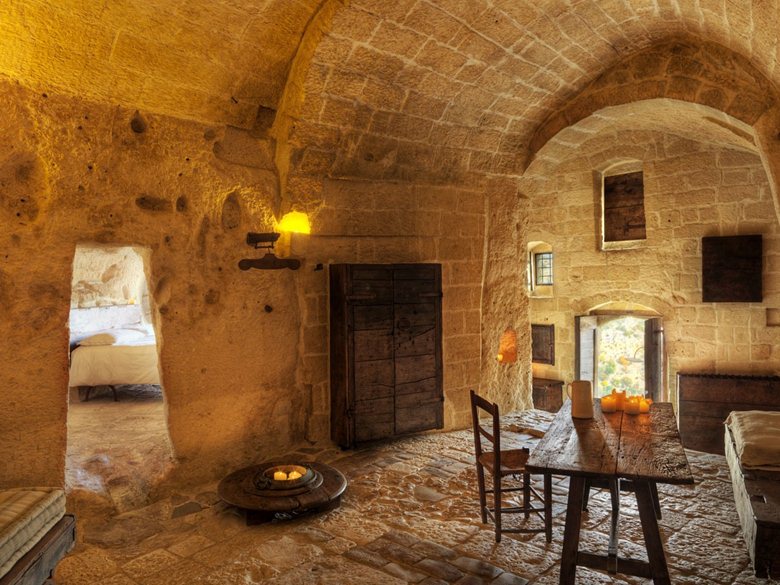
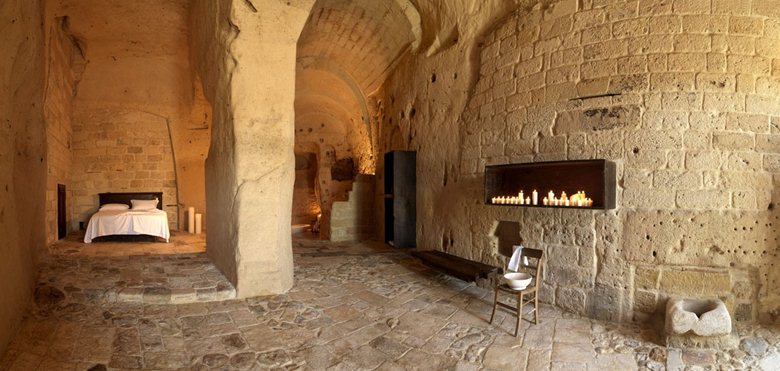
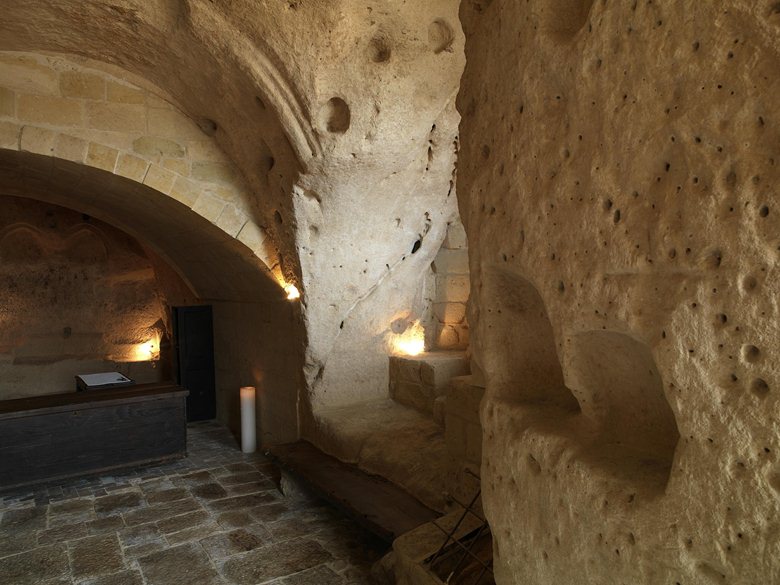
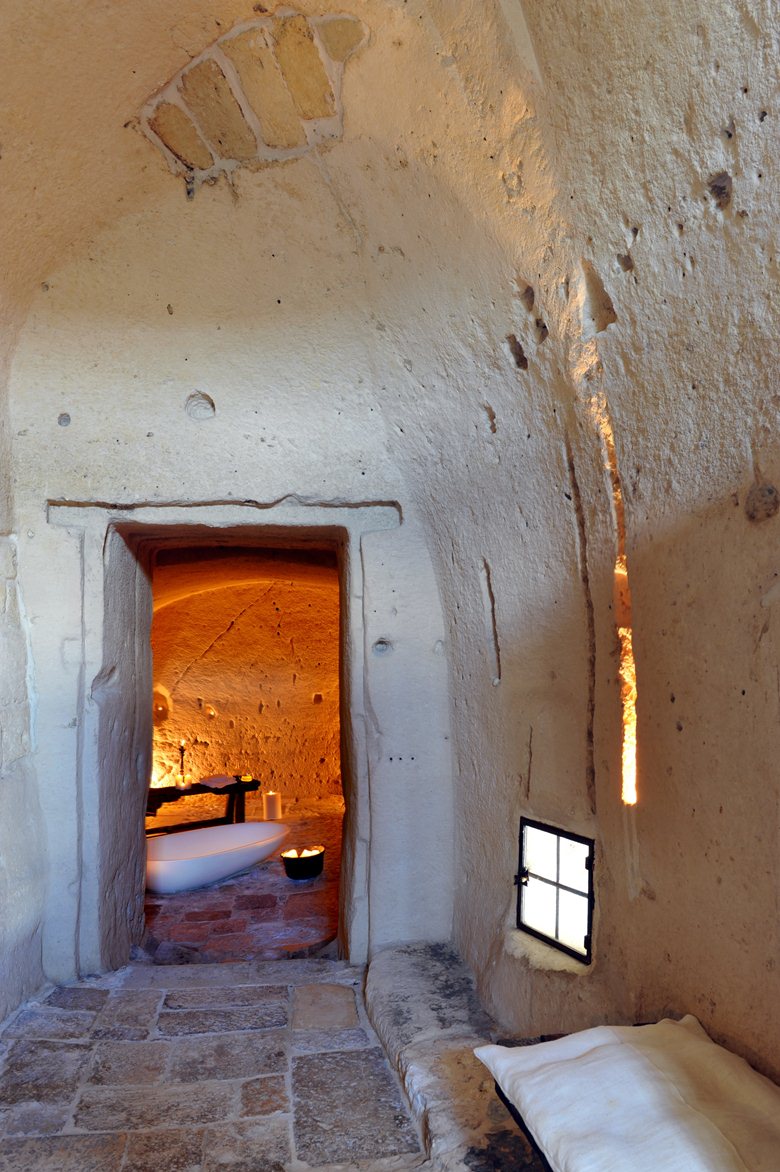
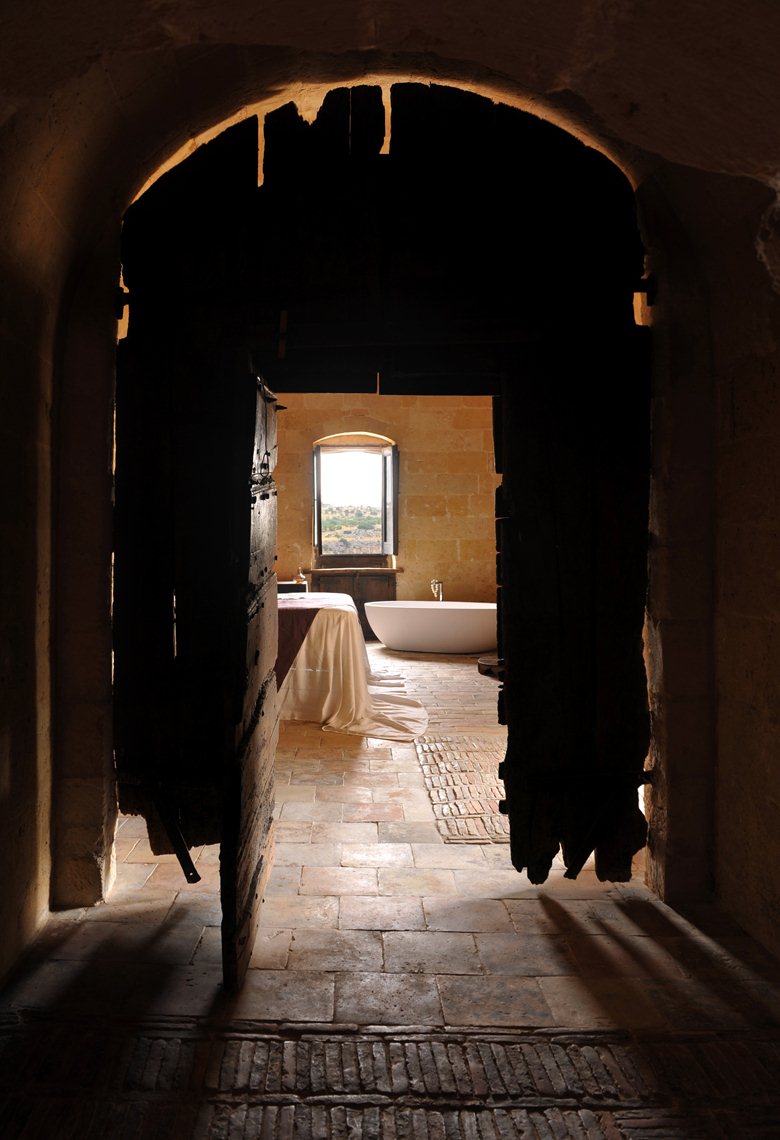
In the oldest part of the Sassi, the Civita, the caves overlook the Gravina ravine and face the dramatic scenery of Murgia Park and its rupestrian churches. Sextantio transformed this setting into Le Grotte della Civita, a hotel with eighteen rooms inside large caves, restored with a deliberately restrained approach that uses salvaged materials, from floors and furnishings to linens.
The project was developed by Daniele Kihlgren with Enrico Ducrot and Margareta Berg; the restoration design is associated with Margaret Berg and Laura Einaudi. Its guiding idea is to preserve the original forms and materials as much as possible, avoiding the feeling of a standard hotel inserted into an ancient place.
The structure accommodates about forty guests and is arranged over three levels connected by stairs and terraces, giving each room an independent entrance. The outdoor areas, including the entrance terrace, a garden with plants typical of the Murgia and a small vegetable garden, look toward the gorge carved by the Gravina River.
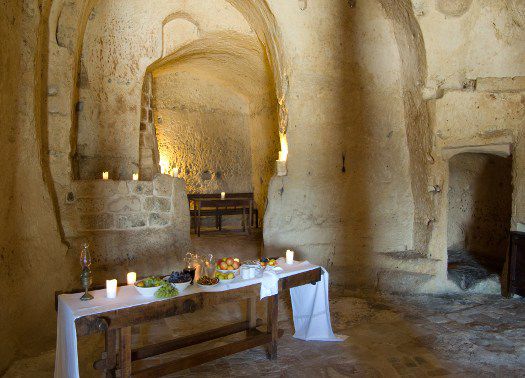
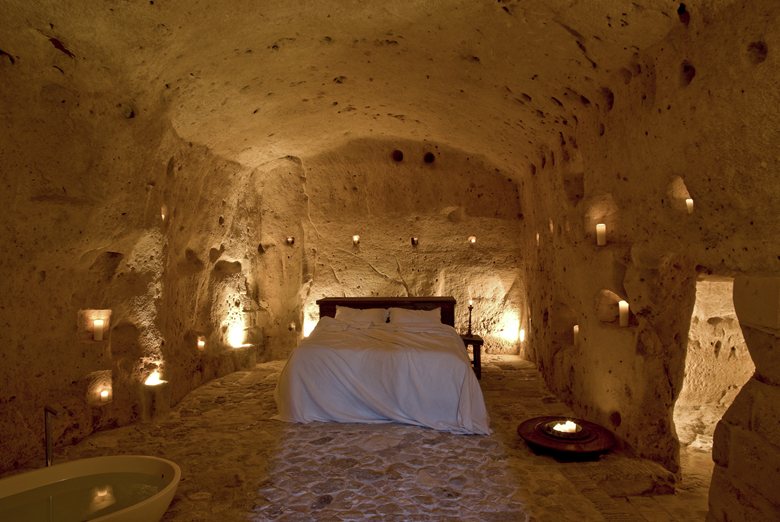
The caves have been restored and furnished with an almost extreme respect for the existing spaces. The furniture has clean lines and little decoration, while many pieces are made from salvaged old wood using traditional craft techniques. The linens date from the early twentieth century and were hand-stitched. In keeping with the spirit of the project, the rooms do not include televisions or minibars, but they do have radiant floor heating, cooling systems and internet access.
Guests are offered fresh water, seasonal fruit, candles and essential oils from the Murgia. Breakfast is served in the evocative thirteenth-century rock-hewn church, with cakes, biscuits, jams, cheeses and cured meats from local organic producers. In the evening, tastings of Lucanian products and wines can be held beside the large fireplace carved into the stone.
Source: Le Grotte della Civita

 miranda_shida