The lighting of a swimming pool in the backyard or garden has become more than a matter of aesthetics and attraction in recent years. The beauty of an outdoor area in the evening is mainly due to the decorative lighting of the pool. Installing a complete audiovisual system can create a unique atmosphere around the water.
Traditional pool lighting in harmony with clean design lines

Lights are mounted on the bottom or sides of the pool. The type, shape and size of the installation, the viewing position and the location are all crucial factors for the desired final result.
The pool scene with light

The most common pool lights are halogen, LED and fiber-optic systems. Halogen light sources are the traditional solution, but they have drawbacks, including higher energy use and mercury content. To create different light colors, halogen lamps are used with color filters such as blue, green and red.
Pool lighting with glass fibers

Glass fibers work on the principle of total internal reflection and can maintain uniform light output. They are preferred for their long life, low power consumption, high reliability and ease of installation. The filter used by the light source determines the color and amount of light transmitted through the optical fiber. The effect may be diffuse or directional, or both can be combined. Fiberglass strips give a soft, relaxing glow to a swimming pool when hidden under the edge of the pool, near a fountain or around other water elements. When placed on the surface, they emphasize the shape of the pool. With extraordinary placement on the bottom or sides of the pool at night, you can create the illusion of a starry sky.
The advantages of LED lighting for the pool

LED lighting has several advantages, including reduced energy consumption and a long service life, and it is environmentally friendly. Lower current intensity makes it possible to increase the number of light sources. With remote-control systems, you can program colors and effects, such as changing flashes or reducing and increasing the intensity of the light. LED technology enables a wide range of colors, from ultraviolet to infrared. Any desired color combination can be obtained.
The effect of colors in lighting design

According to chromotherapy, different colors have different effects on the human mind, psychology and mood. For example, green reduces nervousness and provides balance and equilibrium. Red stimulates and invigorates the body’s vital processes. Blue brings calm and peace and encourages creativity. Contour lighting is used when you want to emphasize the shape of the pool. To highlight the size and scope of the pool, underwater lights can be arranged throughout it. They are usually installed during pool construction.
Side lighting and outdoor pool lighting

Side lighting should be installed at least 20 cm below the water level. To determine the number of light sources, use the following rule: one square meter of water requires about 25 W of light intensity.
Decorative elements in the pool scene

Pools can include attractive features such as fountains and waterfalls, which add movement to the water. If you install lights in front of or behind a waterfall, the effect can be amazing.
Bright spheres

An interesting option for swimming-pool decoration is the use of sphere-shaped lights that float on the surface like water lilies, jellyfish and similar forms. The light they emit can be radial or direct, illuminating the surroundings or adding volume to the water. These devices contain a light source with batteries inside a dark polymer shell. Photovoltaic cells can also be used to store solar energy.
Pool lights in the shape of jellyfish

Modern lighting technologies allow synchronized lighting and image effects on the surface of the water. There are basically two methods: projection onto a linear water curtain, and projection onto water mist for a three-dimensional image. As you can see, night lighting for the pool deserves special attention. Light that comes directly from the surface of the water creates the strongest attraction in the pool. Doesn’t that make you want to create the same effect in your own pool?




 Anna Lohan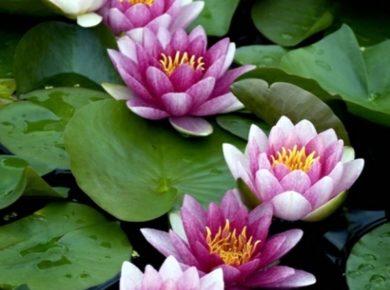


 Peter Dark
 miranda_shida