Light in a room can act almost like a building material: it shapes the atmosphere as much as walls, colors, and furniture do. Each kind of lighting creates its own effect. Understanding the basic differences between direct, reflected, warm, cool, diffuse, and focused light can help you plan lighting in every room and give the home a warmer, more considered atmosphere. Here are a few points to keep in mind when choosing home lighting.
A Selection of Home Lighting

When choosing lighting, the light source matters. Light may come directly from a lamp, bounce from an illuminated surface, or combine both effects. Wall colors, textiles, and finishes all influence how that light is perceived, so different sources can create very different color effects in the same room.
Color Temperature and Home Lighting

The color of incandescent light depends on the temperature of the filament. These lamps usually produce a warm tone that differs strongly from daylight. Bulbs may be globe-shaped, candle-shaped, mushroom-shaped, or cylindrical, and the glass may be clear or opaque. In general, incandescent light intensifies reds, oranges, and yellows, while blue tones can look duller or gray.
Wall shelf with integrated lighting

Halogen lamps are another lighting option. Compared with conventional incandescent bulbs, they are compact, mechanically robust, and thermally stable. Their relatively high color temperature, often around 3200 K, gives them good color rendering, but they can emit ultraviolet radiation, so they should be used carefully near photosensitive materials. They work well where strong light is needed, such as facades, gardens, or accent zones. Metal-halide lamps can also be used when an interior needs intense, adaptable light.
Fluorescent lamps are tubular discharge lamps filled with low-pressure mercury vapor. They offer broad, even light with relatively low glare, and they are commonly classified by color temperature.
Some types are listed here:
– Daylight (6300-6800 K)
– Cool white light (4300-4700 K)
– White light (3500-4200 K)
– Warm white light (3100-3400 K)
– Warm-tone light (2700-3000 K).
Emphasize the texture of the stone

Fluorescent lamps are useful where color rendering matters. In work spaces or commercial interiors that combine daylight with artificial light, cool white lamps can be a good choice. White light is widely used in offices, meeting rooms, and administrative spaces, while warm white light is usually more comfortable for living spaces. Fluorescent lighting can also create decorative effects in shop windows, restaurants, bars, and clubs.
Warm light for pure white decor

An LED lamp uses semiconductor diodes to emit light. The diode is housed in a small package, often with a lens that distributes the beam. LEDs are compact, efficient, and available in a wide range of formats for modern interiors.
Their main advantages are long service life, quiet operation, compact size, varied color options, low operating voltage, and low heat output. Many LED products can last for tens of thousands of hours and use far less energy than older light sources.
LED under-cabinet lights in the bathroom

LED systems open up many possibilities for new lighting concepts. Linear LED strips, for example, have changed furniture and cabinet lighting, and many fixtures can be dimmed. Some systems can also shift color temperature or color through a controller.
In modern living spaces, functional areas are often clearly divided. Each area is shaped by its purpose and by the architecture around it. A single central ceiling outlet rarely satisfies every need, so lighting should be placed where it supports the task and highlights the zone. Different fixtures can emphasize different parts of the room and give each corner its own character.
LED lighting in the drawer

Sometimes a room needs uniform illumination, while other situations call for direct or indirect light. Linear fixtures can be arranged along the edge of a ceiling or cove to wash a wall with a warm tone. With indirect lighting, the ceiling and walls become reflective surfaces, softening the beam and reducing glare. General lighting can also come from ceiling fixtures, chandeliers, and other luminaires.
Shadows are just as important as light. A room without contrast can feel flat or overexposed, while well-placed lighting gives depth to the interior and brings the designer’s idea to life. Changing the lighting is one of the simplest ways to alter the atmosphere of a space.
Blue LED light points

Living room ceiling lighting

Decorative lights

Blue accents in a gray room

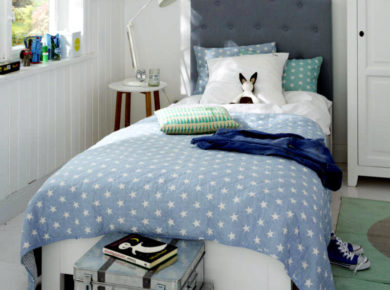
Pleasant atmosphere in the bedroom

Kitchen lighting effect



 Peter Dark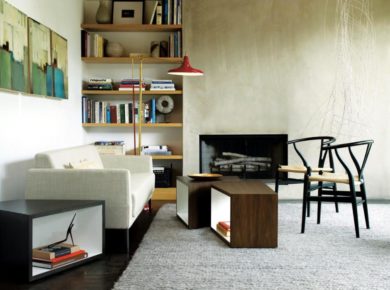
 Anna Lohan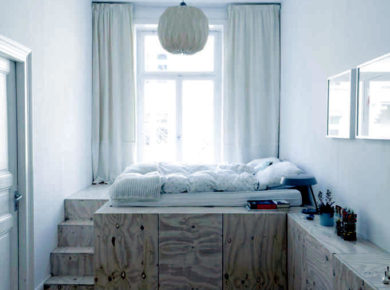

 miranda_shida