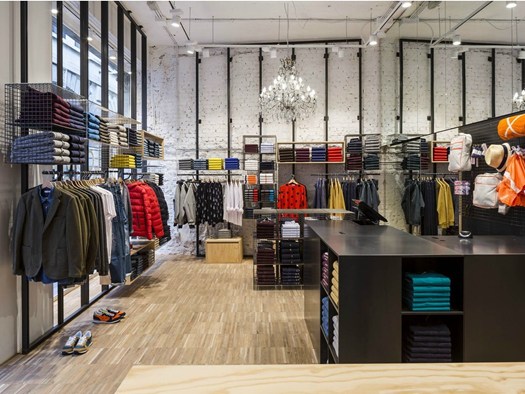
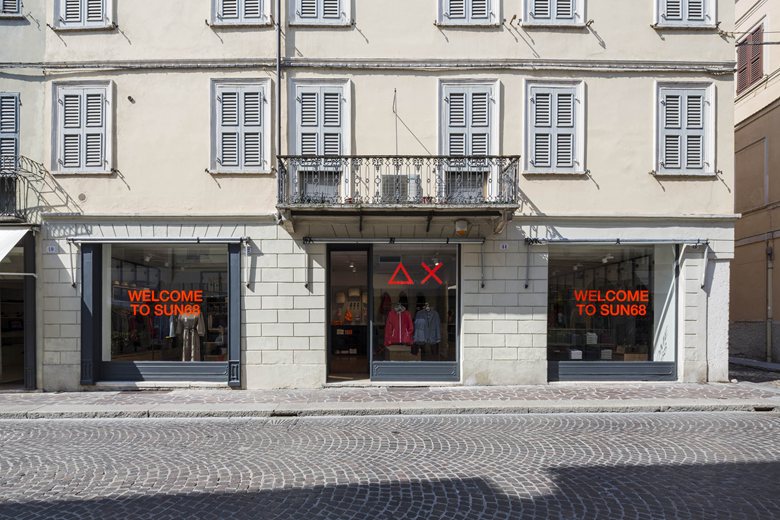
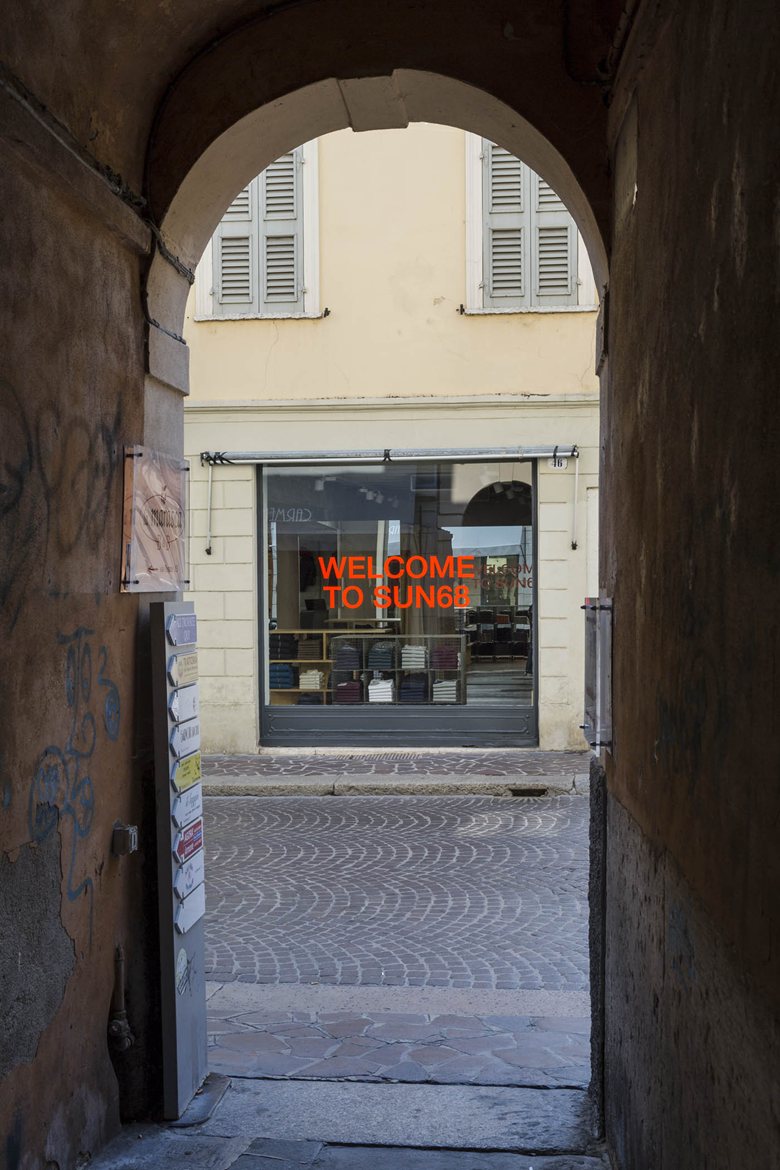
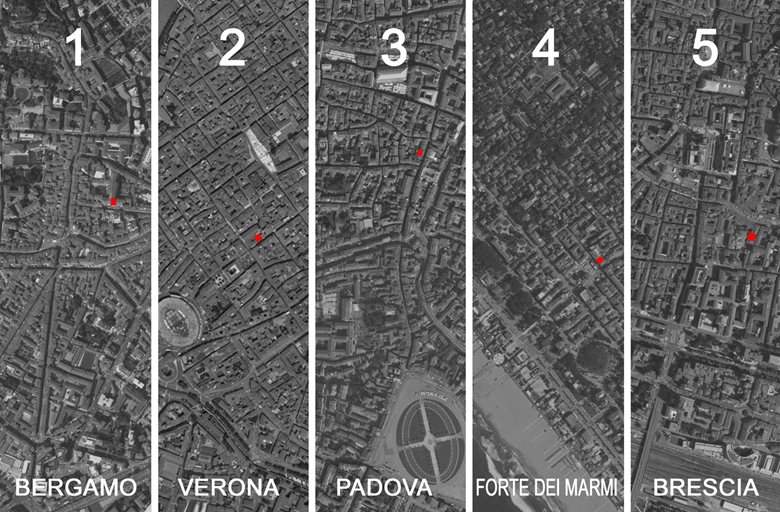
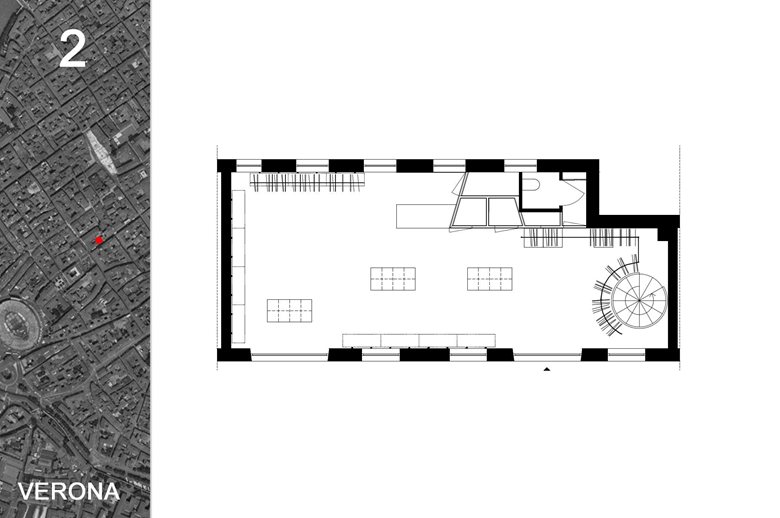
12/10/2015 – In Veneto, Luca Cuzzolin and Elena Pedrina of C&P Architects oversaw the design and construction of SUN68 stores across Italy. The first stores opened in Lido di Jesolo and Milan between 2009 and 2011, followed by Mantua, Udine, Cuneo, Modena, Bergamo, Verona, Padua, Forte dei Marmi and Brescia.
For the first stores, the architects developed a single, recognizable architectural image, while sharply respecting the conditions of each room and reading its constraints in order to choose a design capable of revealing the material or structural nature of the site. Today, instead, the demand is for flexible spaces in constant development: stores that can be easily adapted to necessary changes and installed in a short time.
The aim is not a rigid format that is reproduced under different conditions, but a design system based on two levels of intervention.
The first level addresses the shell of the existing premises, while the second defines the design elements needed for the shop to function.
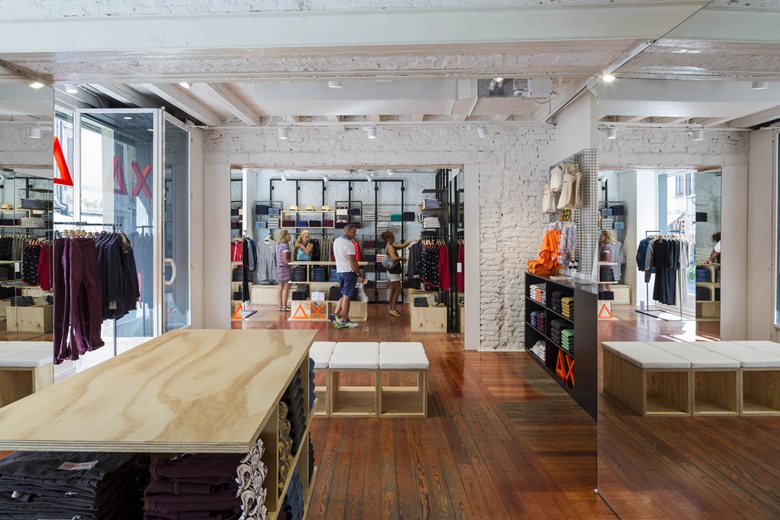
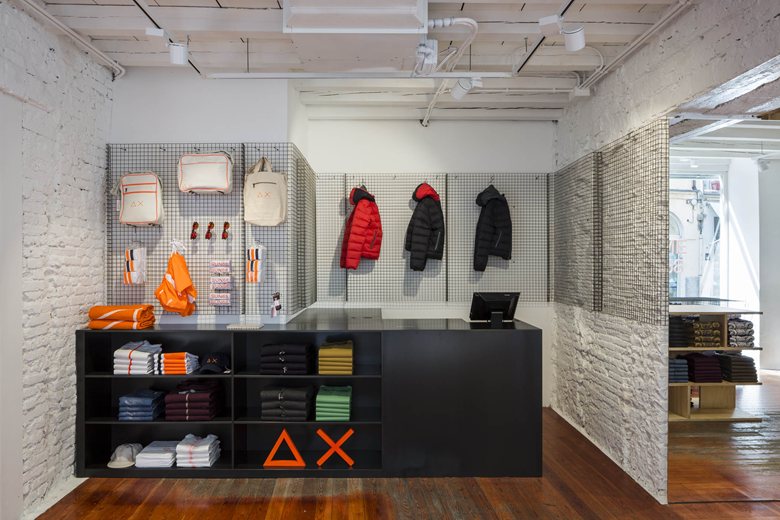
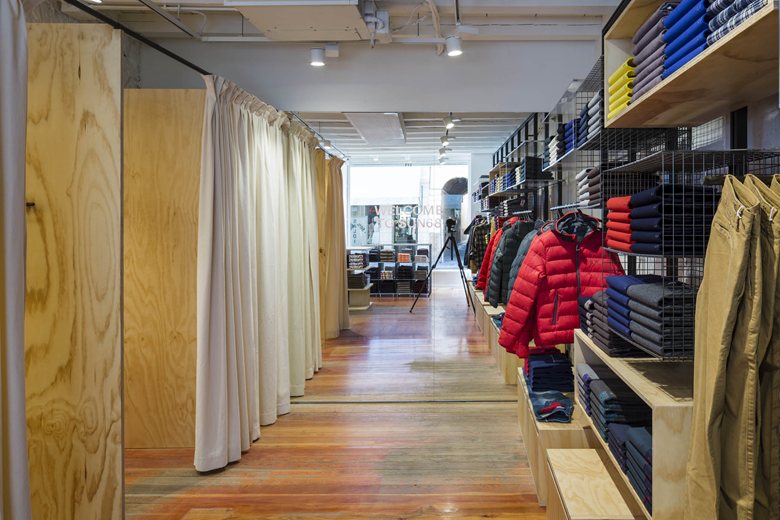
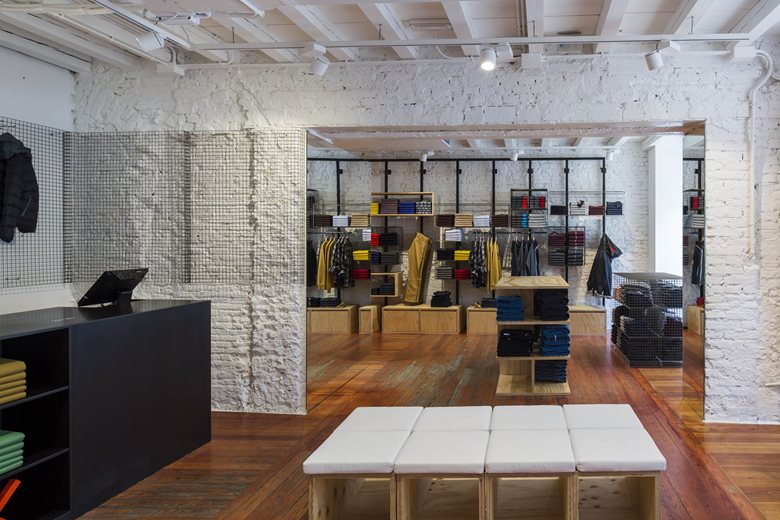
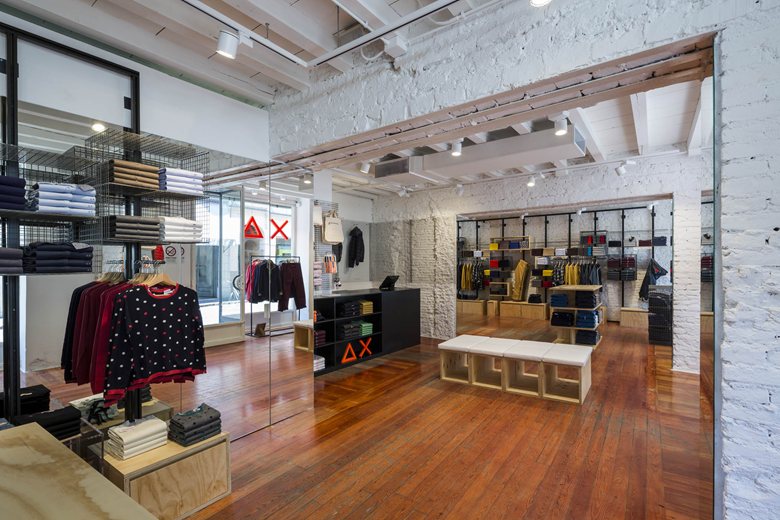
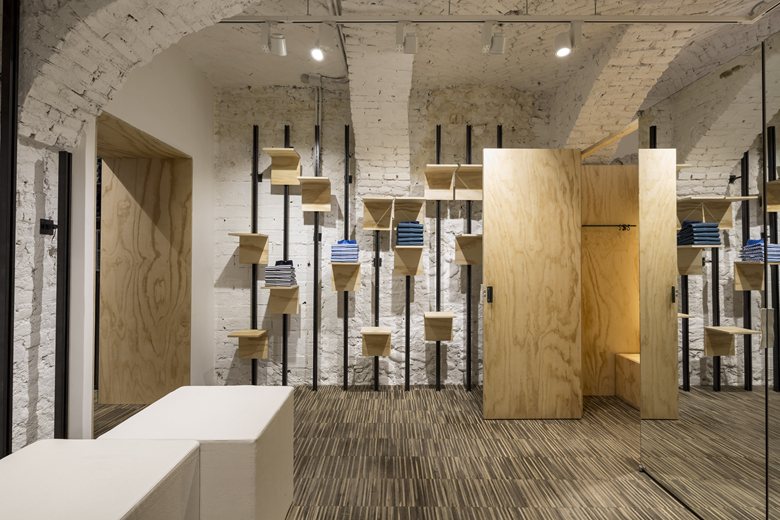
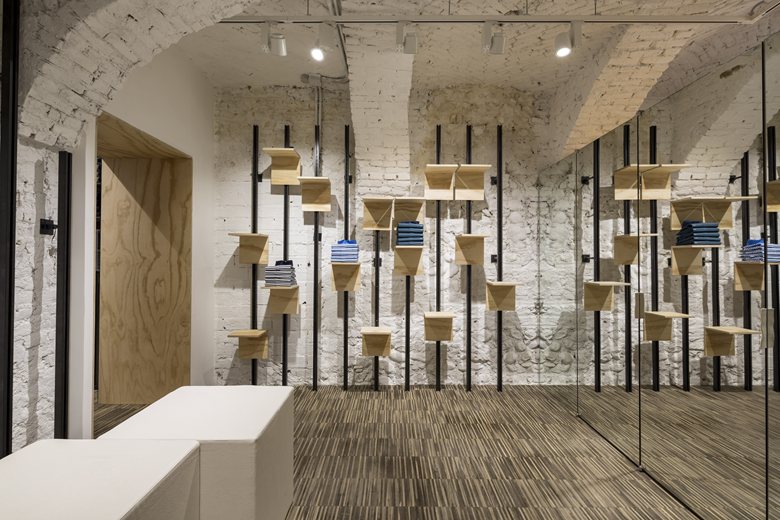
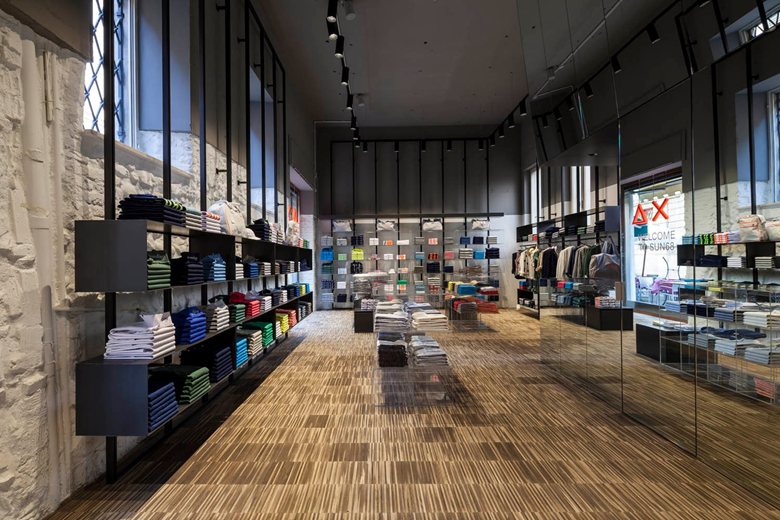
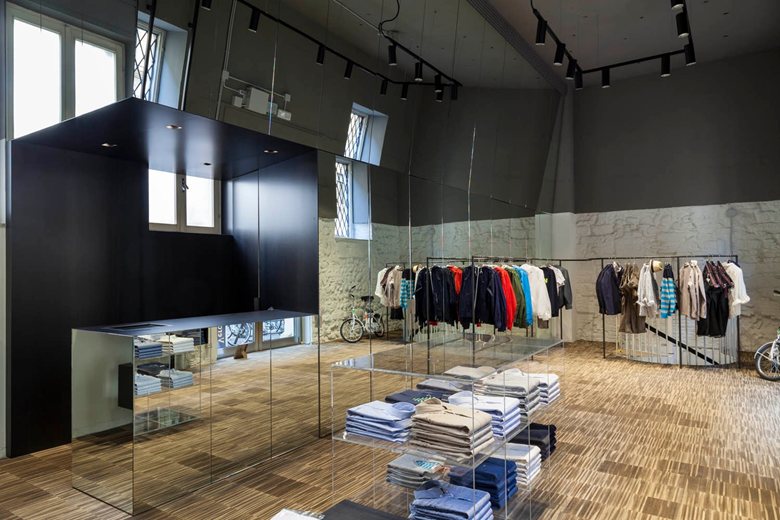
Work on the building envelope, when possible, involves deep cleaning of the existing surfaces, in an attempt to reveal old walls, original floors or other historical elements, as in Brescia and Verona. In other cases, the strategy transforms the interior envelope into a neutral and monochrome environment, displaying all elements as simple planes: street-facing sections, random walls or exposed pipes, as in Padua.
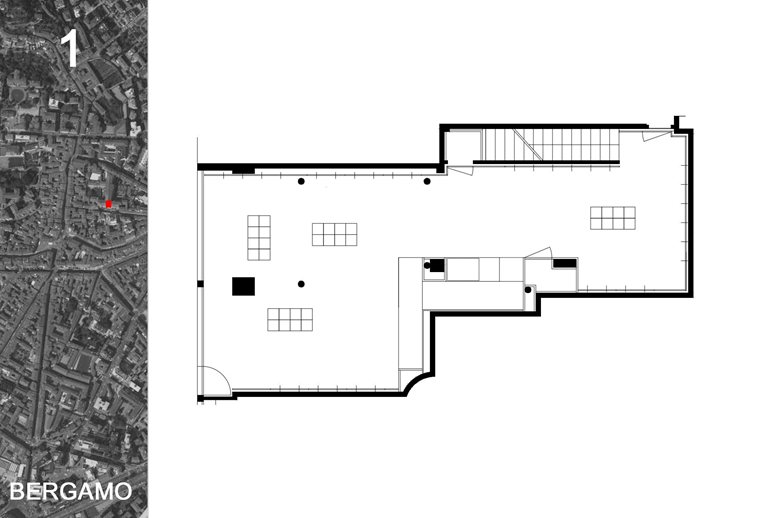
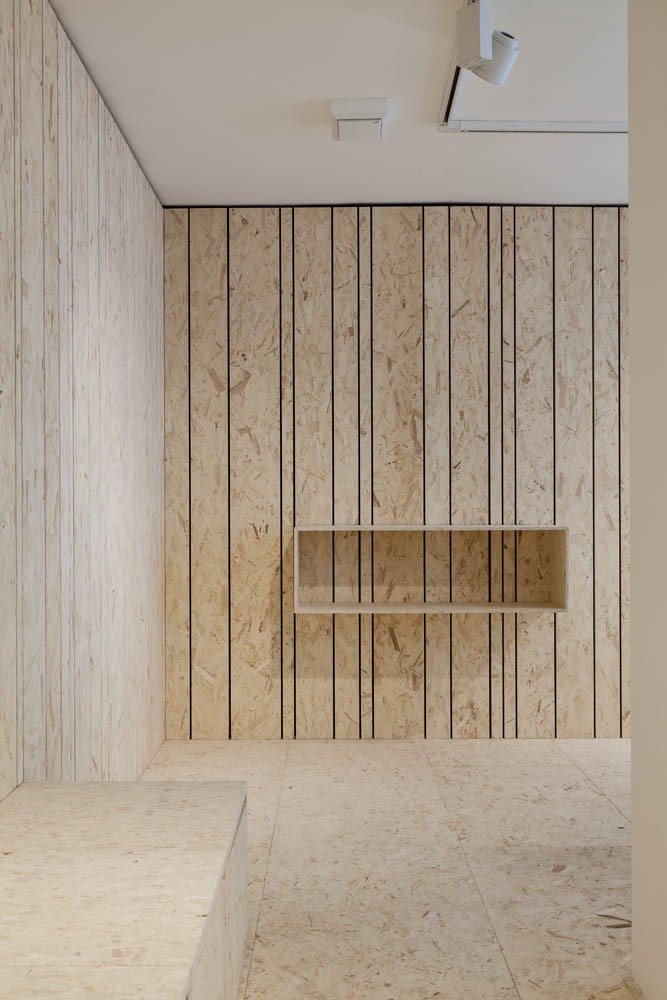
When the pre-existing elements cannot be enhanced, a completely new box-container is built and superimposed on the floor and walls. This new box inserted into the existing environment becomes the background for the exhibition systems, installations and support elements of the shops, as in Bergamo.
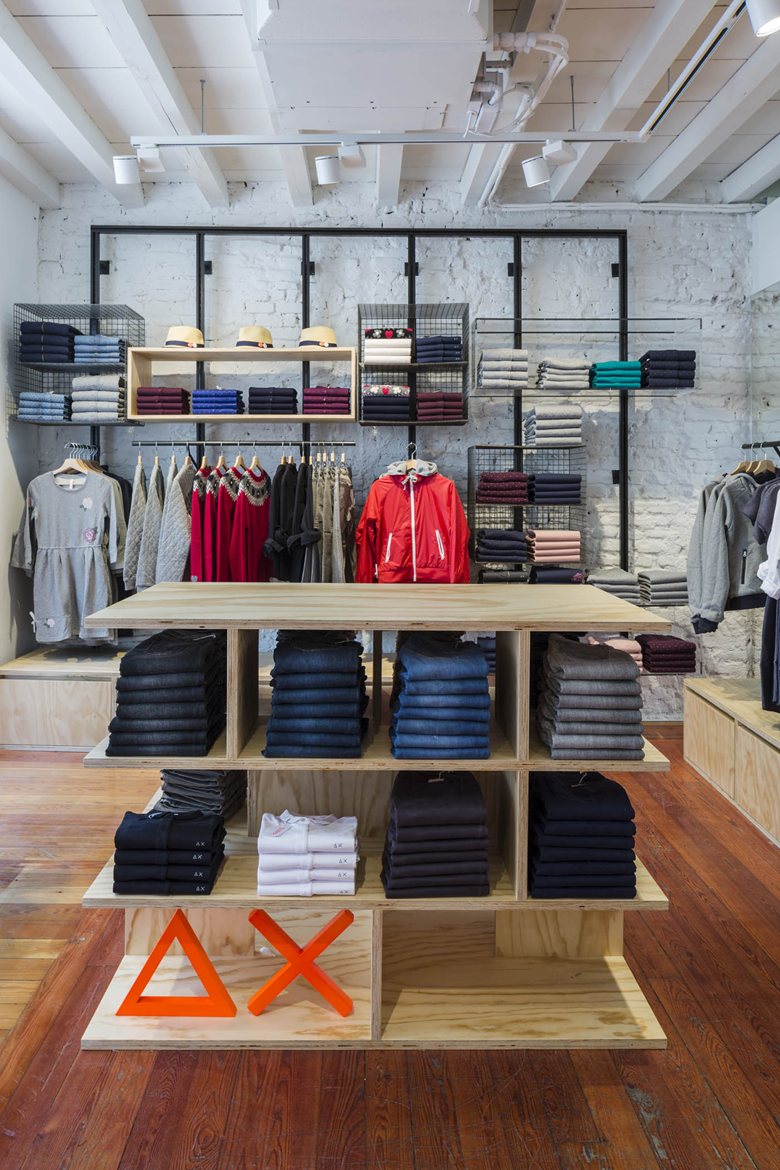
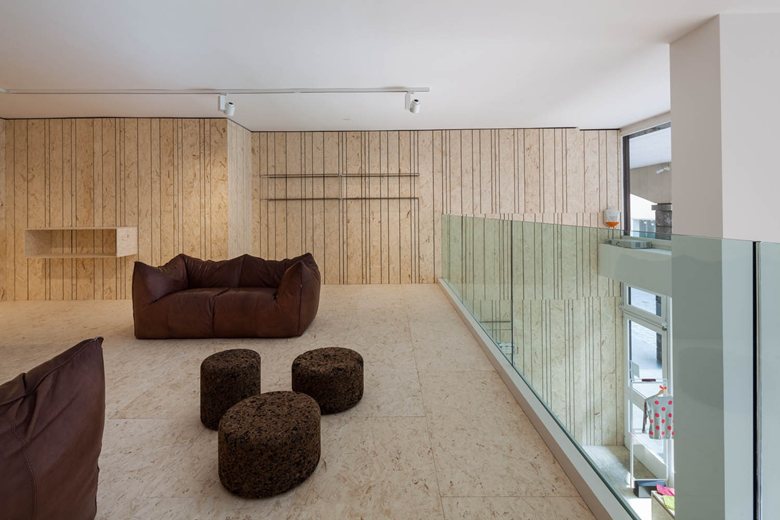
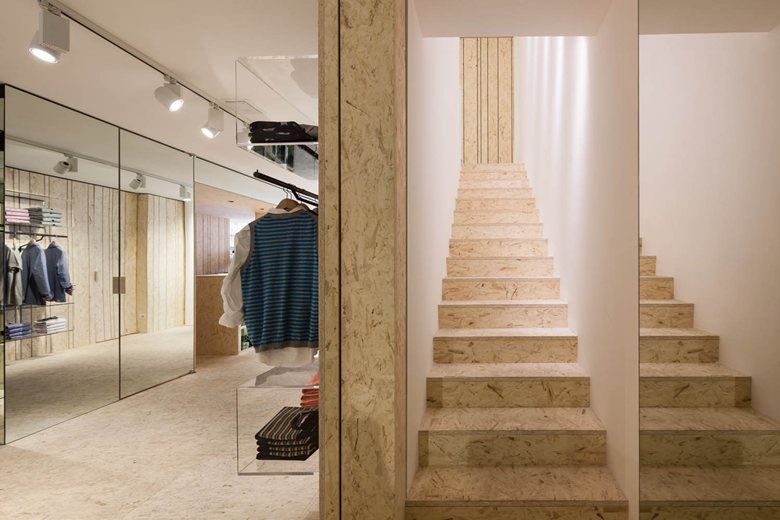
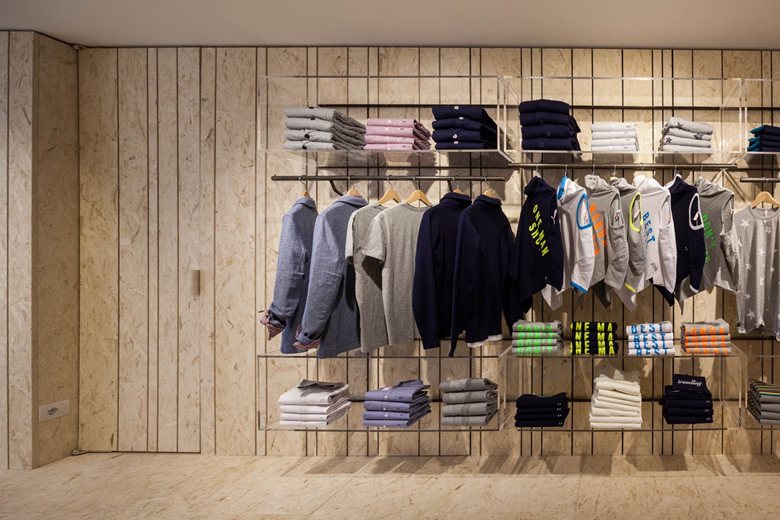
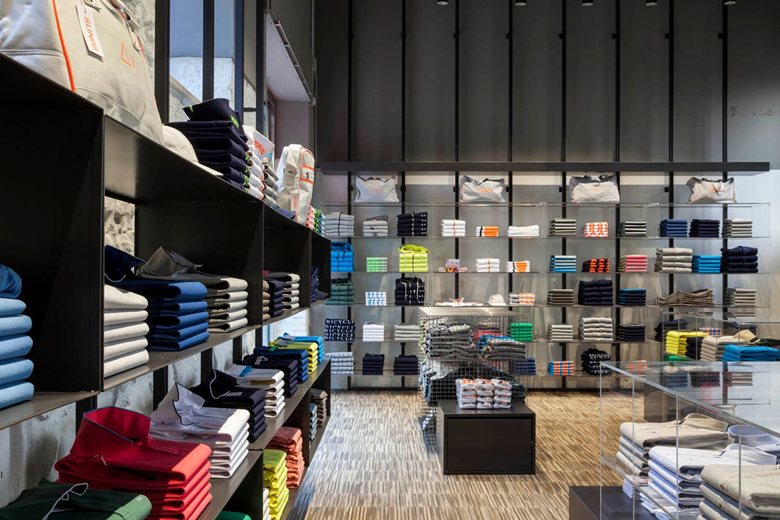
The second level concerns the exhibition concept, storage elements, fitting rooms and other accessories necessary for the store’s operation, using a few materials such as chipboard, iron, mirror and Plexiglas.
The mixture of different materials allows a varied image to be built each time, while maintaining a defined and recognizable sequence of processes for the user.
The treatment of the shell gives the room a sense of stability and durability, while the lighter and more temporary furniture enhances the product and contributes to the architectural character of the rooms.

 Anna Lohan
 miranda_shida
 Peter Dark