25/07/2016 – Casa JMG, the latest work by architect Luca Zanaroli in the countryside of Polignano a Mare, Bari, explores the balance between rural memory and contemporary architecture.
The rural buildings that shape this landscape still carry a strong symbolic character and a precise architectural language. When an existing structure must be recovered and integrated into a larger project with new volumes, the task is not only technical. It also involves memory: how to preserve the character of the past and reinterpret it in a contemporary way.
The project moves between the desire for contemporary design and the need for symbols, between innovation and tradition. Its goal is to overcome that opposition and make the two needs complementary.
Anyone building or restoring in this context must spend time understanding the desire to belong to the place, the close connection with the territory and what it expresses. Architecture here cannot respond only to biological needs or functional organization; it must seek balance between the artificial environment, daily life and the natural landscape.
The client asked for a new, modern house for two families, with mutual privacy, a shared living room and common space, an area for guests, a swimming pool and generous outdoor areas for friends, as well as an improvement of the surrounding landscape.
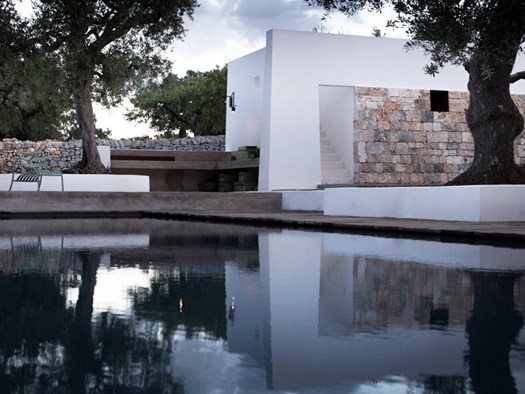
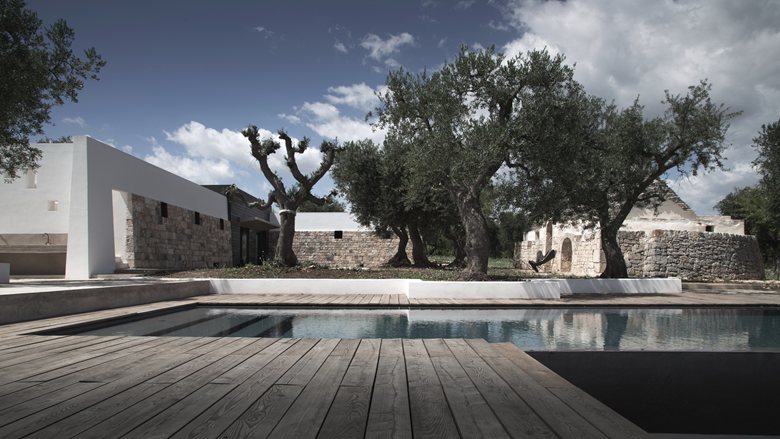
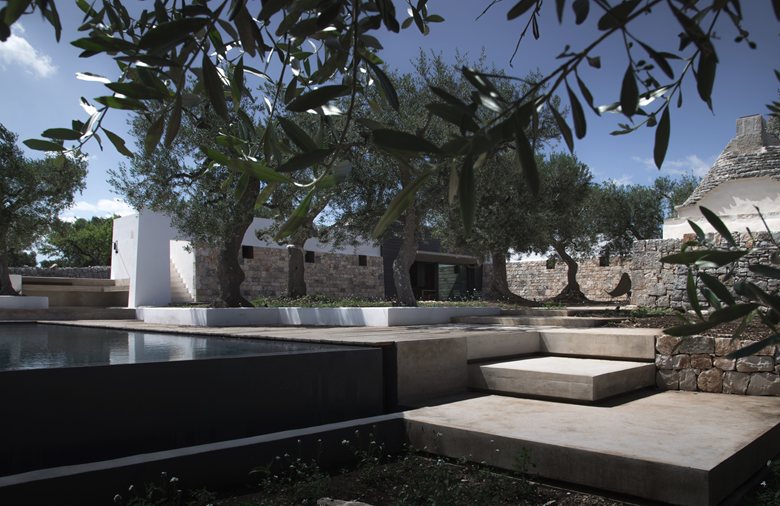
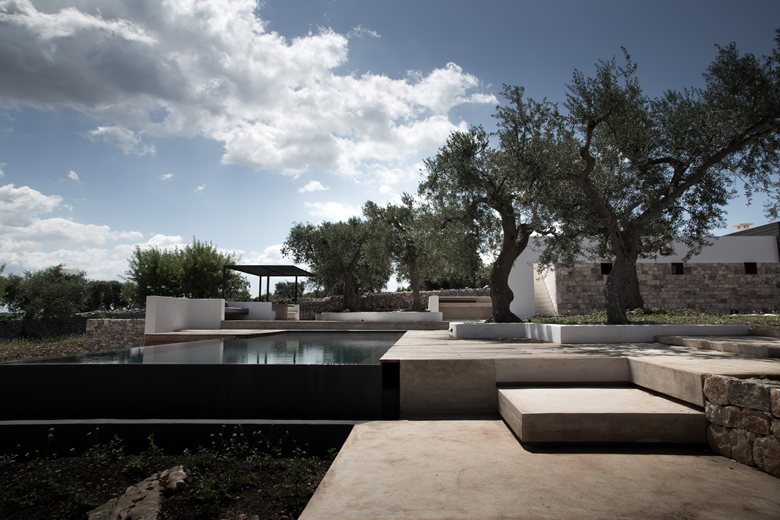
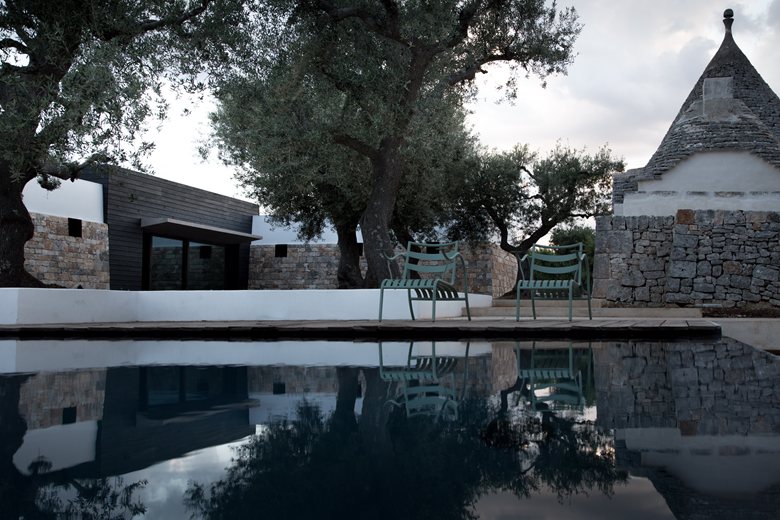
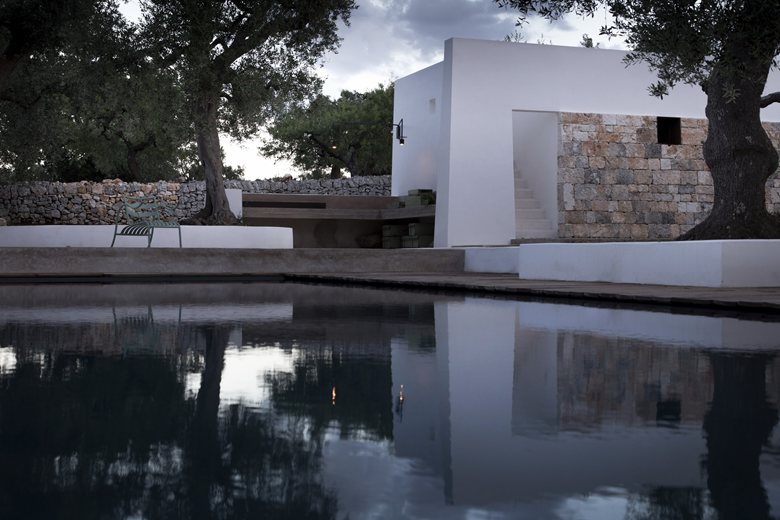
The idea was to create a rural courtyard. One side is defined by the existing trullo, now used as a guest dependance; two sides are formed by a new L-shaped building; and the side facing the valley is closed by the pool.
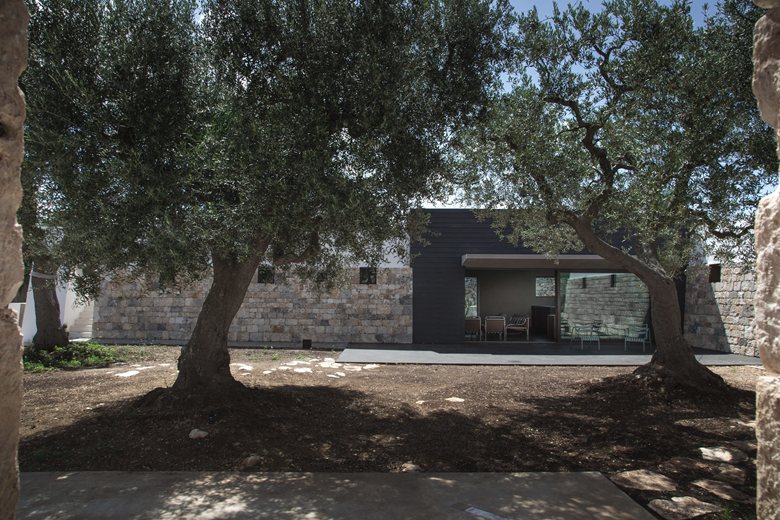
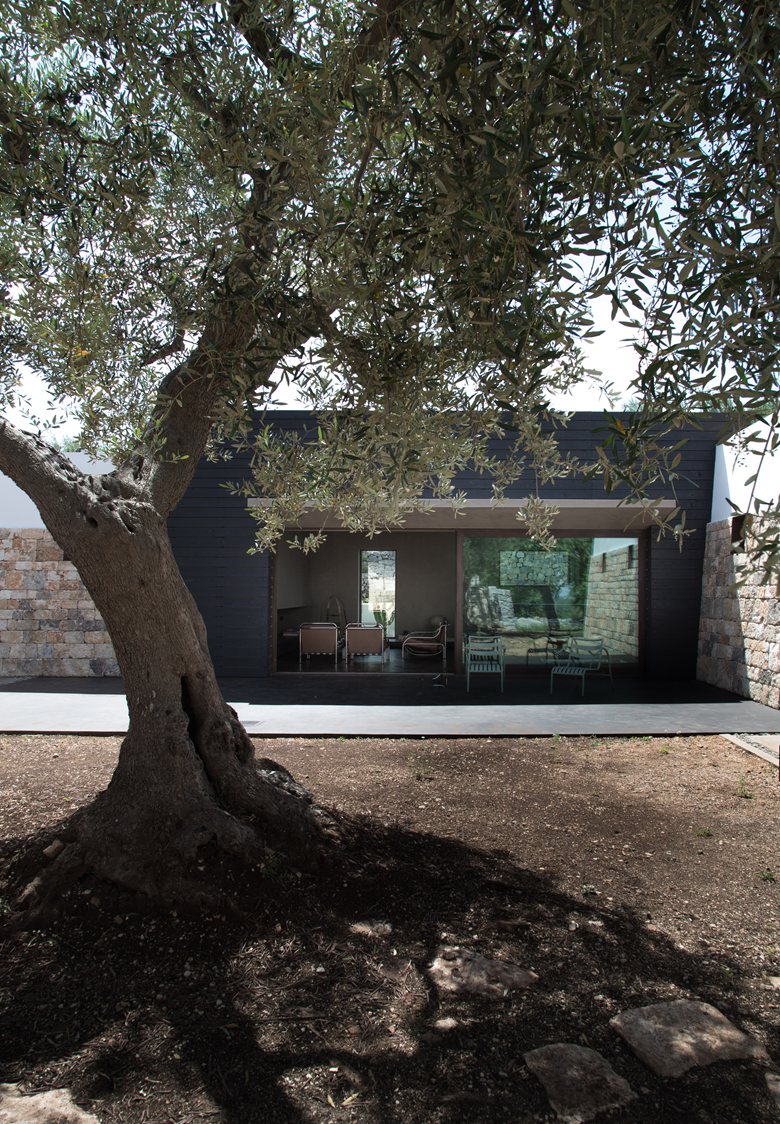
The main house occupies the two sides of the L, with bedrooms facing away from the court for privacy. At the center is a block containing the living room and kitchen-dining area, fully open to the courtyard through a large glazed opening that frames the yard and the trullo.
The owner wanted above all to feel the presence of the surrounding environment, perhaps the main reason for buying the property. For this reason, the house becomes part of its context without losing its own identity.
Zanaroli worked on the correct distance, height and proportions between the courtyard buildings, and on the colors, textures and materials of the new construction. The new building was placed on the same level as the existing one so it would not dominate the trullo.
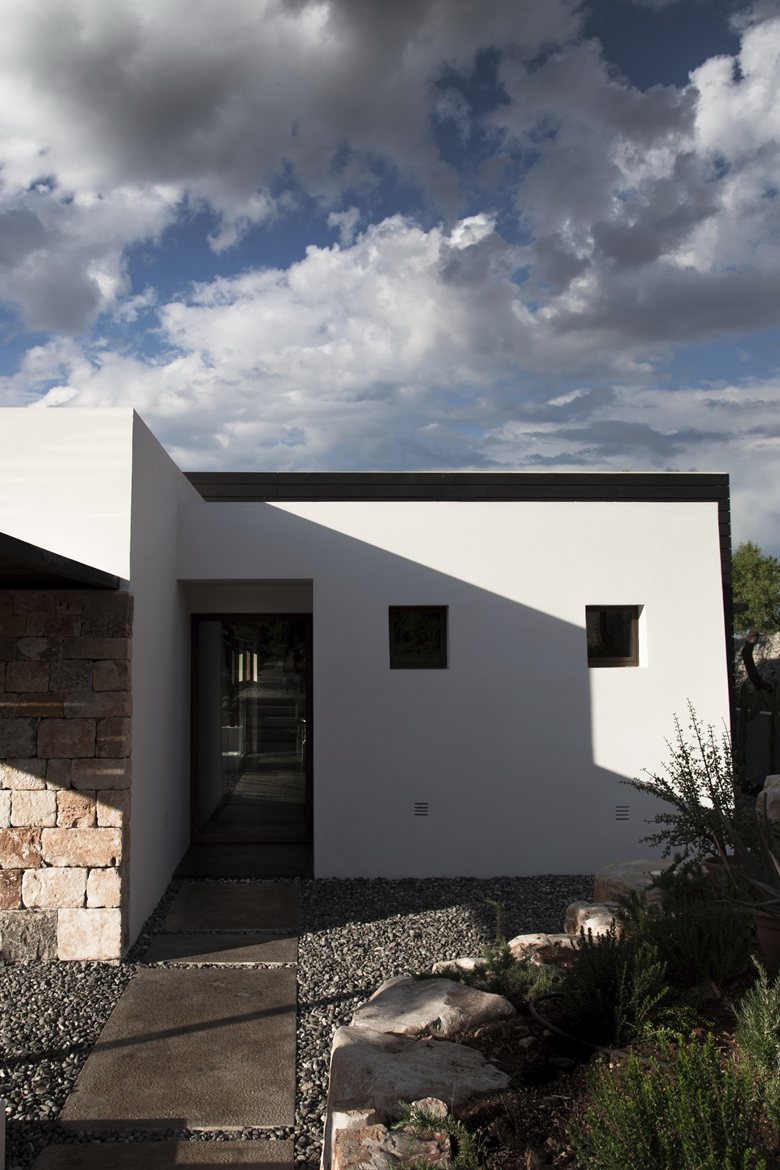
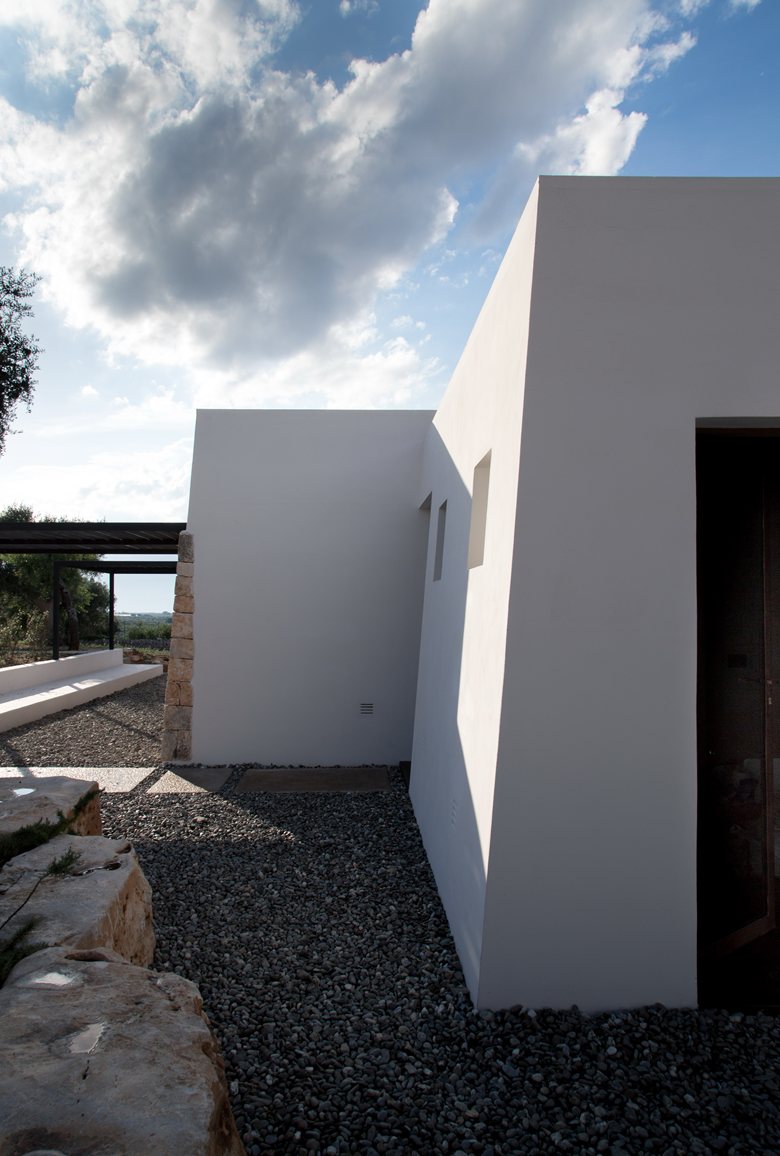
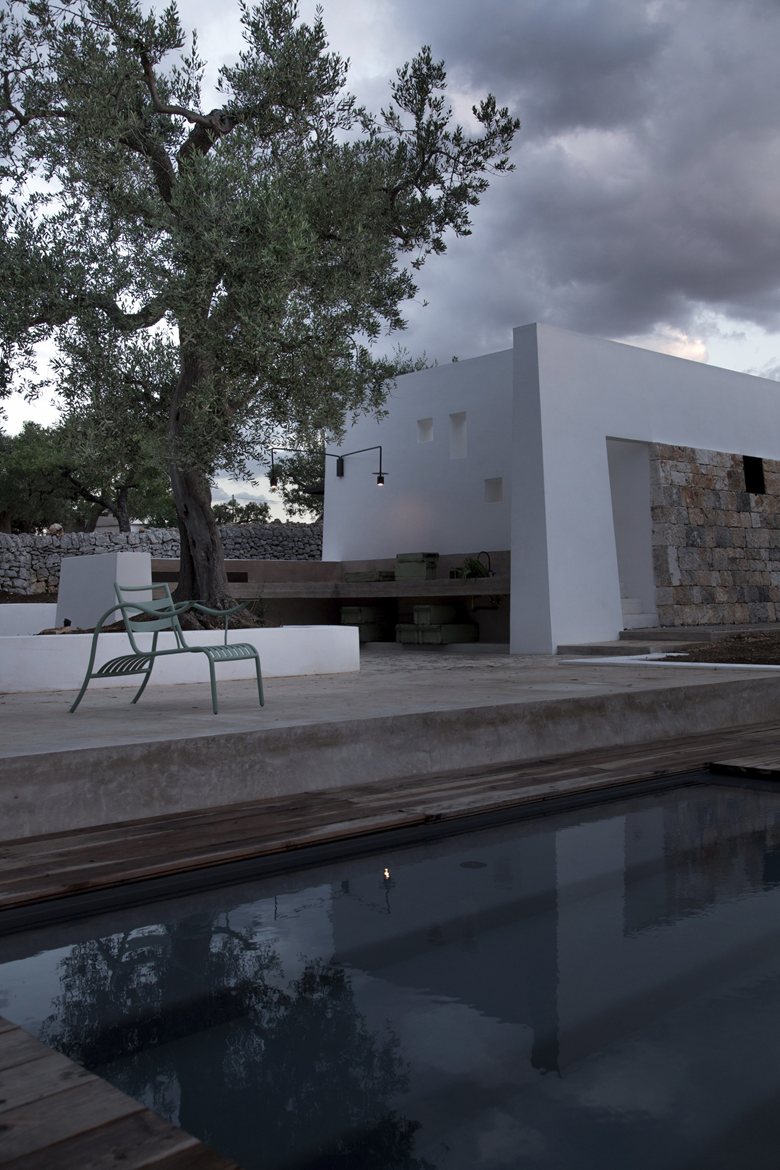
The new architecture begins with a reinterpretation of the trullo’s stone base, reducing the visual impact of the new volumes and linking the buildings spatially and chromatically. Above a dry-laid stone base, white lime plaster gives the walls the typical character of the area while emphasizing the building’s horizontality.
To reduce the impact further, the L-shaped building is interrupted by a deliberately contrasting volume. This black box, square and precise, is clad in black larch slats. It contains the common living and kitchen area and works as a ventilated skin that improves thermal insulation.
Corten steel frames recall the reddish-brown color of the soil and help the contemporary openings settle into the rural context.
Inside, the work focuses on summer light. Openings are designed to capture daylight from above and let it slide softly over surfaces and objects, avoiding harsh light-dark contrasts. Dark, opaque finishes turn the windows into cinematic screens on which the landscape seems to be projected.
Outside, the ground was kept close to its original state to avoid distorting the rural character of the property. Small paths and low stone walls mark the routes. Hand-polished concrete uses tones close to the surrounding stones, while natural larch around the pool relates to the untouched olive trees.

 miranda_shida
 Anna Lohan