If you are moving into a new home and realize that the hallway is still too dark, or if you are simply tired of weak lighting in an existing corridor, this guide can help. Here are a few practical ways to create stronger, more pleasant and better-distributed light.
Recessed Spotlights and LED Lights
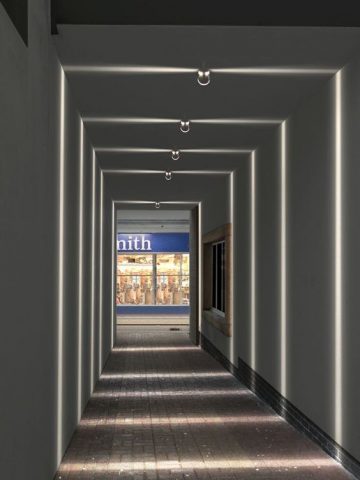
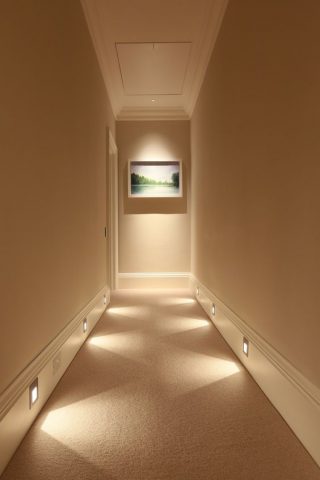
Recessed spotlights are a classic choice and still one of the best solutions for lighting a dark hallway. They look discreet, adapt to almost any interior style and can provide continuous light along the full length of a corridor.
In a long or very dark hallway, spotlights should be positioned evenly to avoid shadowy areas and to create a more uniform connection with the adjacent rooms. For the ceiling, you can also use many small LED lights to create a subtle starry-sky effect.
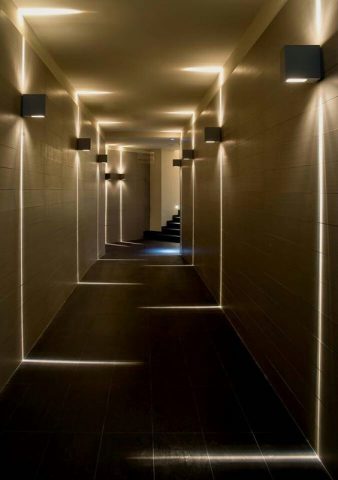
LED strips are also useful for vertical or horizontal light cuts near the wall or floor. These lines of light add visual interest while improving brightness and helping guide movement from one end of the house to the other. LED lighting is also a good choice for reducing energy consumption.
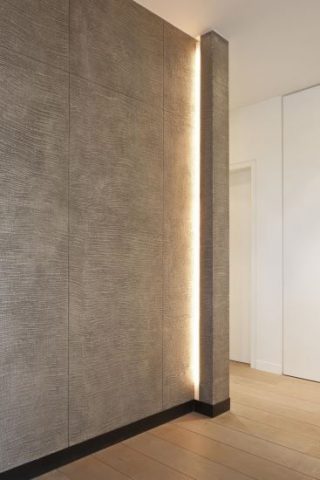
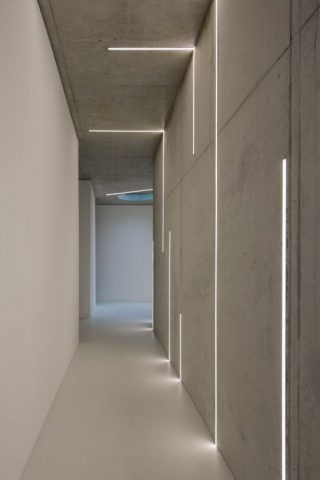
 1 of 6: vertical light strip.
Solar Tubes
Another modern option is the solar tube. It brings natural daylight into an entrance or hallway and can be an ecological solution for long, dark corridors. Combined with well-placed artificial light, a solar tube can make the entire hallway feel brighter and more balanced.
Classic Wall Lights and Spotlights
Wall lights are a timeless solution, especially for those who prefer a classic atmosphere. They create warm, soft and elegant light, and there are many models available, so it is easy to find one that fits the style of the home.
If you choose wall lights, it is often useful to add a few spotlights in strategic positions and turn them on only when stronger light is needed. Directional spotlights are another flexible option. They can be modern or traditional, and for industrial-style interiors, ceiling lights with adjustable arms can work especially well.
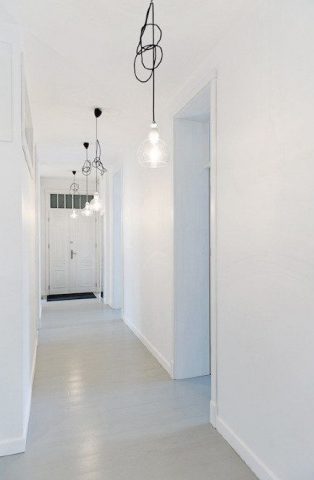
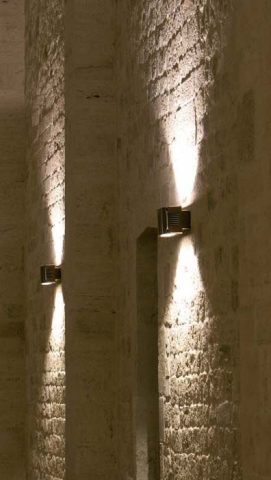
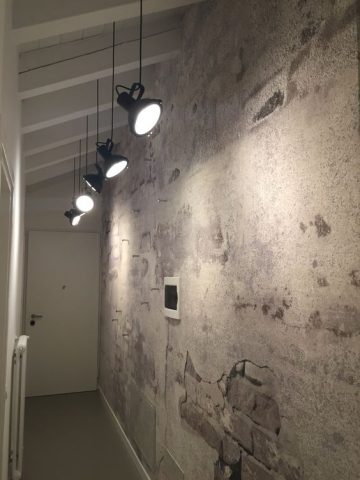
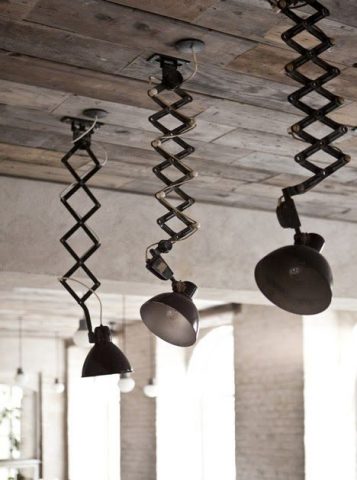 1 of 5: a modern alternative.
Light Installations
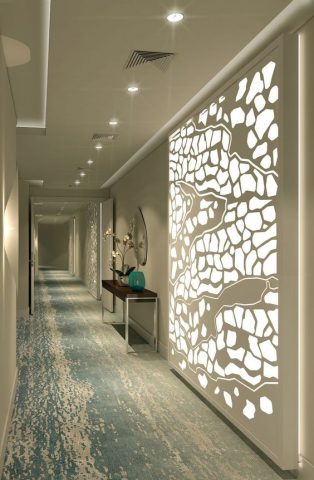
If the hallway has a clear back wall, it can become an ideal surface for a light installation. Illuminating the end of the corridor gives the space a focal point and can make it feel clearer, deeper and more welcoming.
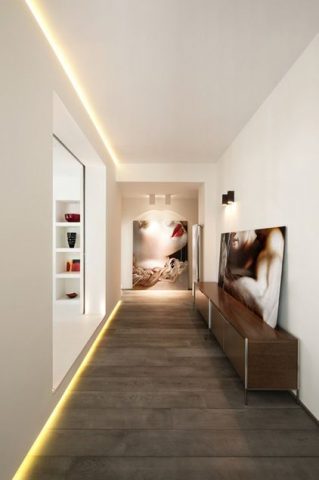
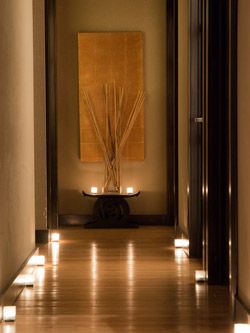
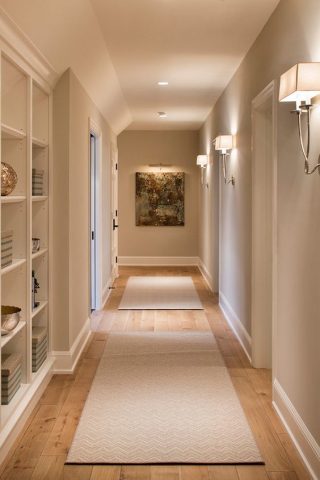 1 of 4: the illuminated end of the corridor.
Mirrors
Increasing brightness does not always mean adding more light fixtures. Mirrors are a simple and effective way to amplify the light already present in a hallway. They add shine, depth and a sense of space, especially when the corridor is narrow or slightly dark.
Wall Colors
Wall color also matters. In a dark hallway, light and neutral shades such as white, beige and pale blue can make the space feel brighter and more relaxing. Wallpaper can also help when it creates an optical effect that makes the corridor appear wider.
Design Niches
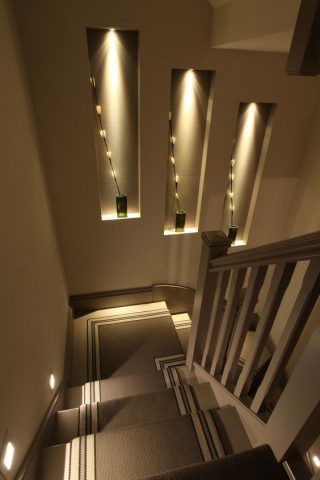
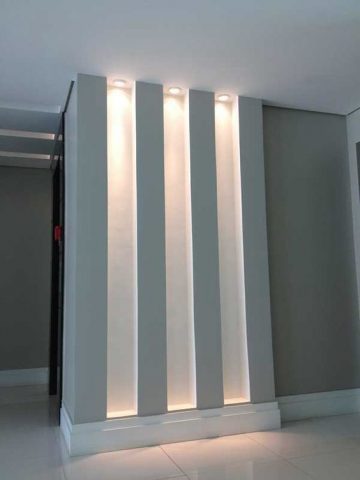
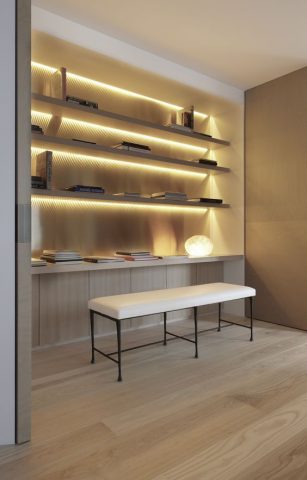
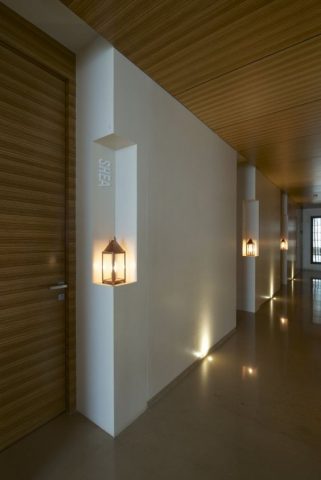
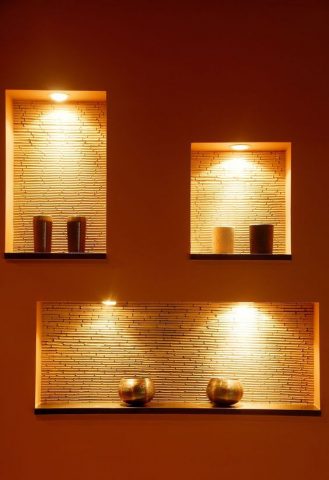
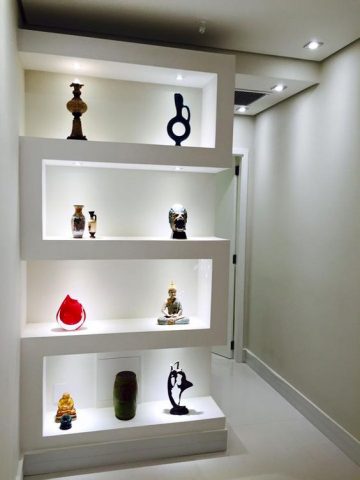
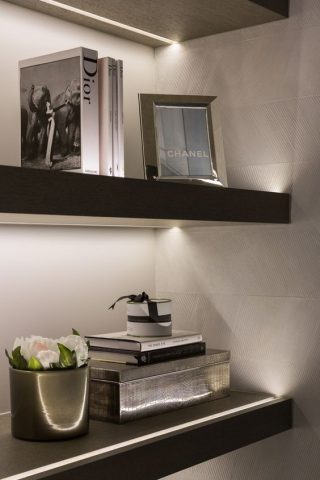 1 of 7: lighting solutions.
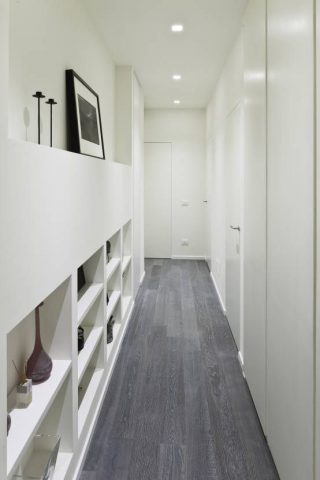
Have you ever thought about creating niches directly in the walls of a corridor? Niches can become both decorative features and real points of light, framing objects, books or artwork in a refined way.
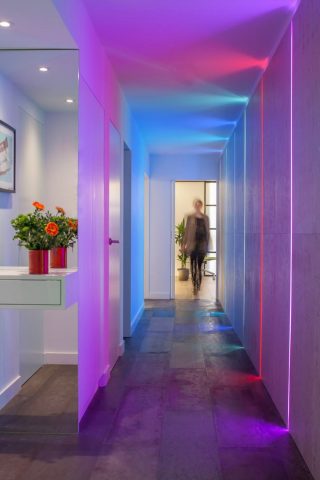
With plasterboard, you can also create horizontal light grooves that visually enlarge the corridor. Vertical cuts can be fitted with colored LEDs for a more decorative effect. If it is not possible to add new architectural elements, use what is already there: paintings, photographs and existing wall features can all be highlighted with carefully placed lights.
Whatever solution you choose, opt for energy-saving lights and timed switches where possible. They combine practicality, quality and elegance.

 Anna Lohan
 Lincoln Matheson
 Peter Dark
 Theresa V. Adams